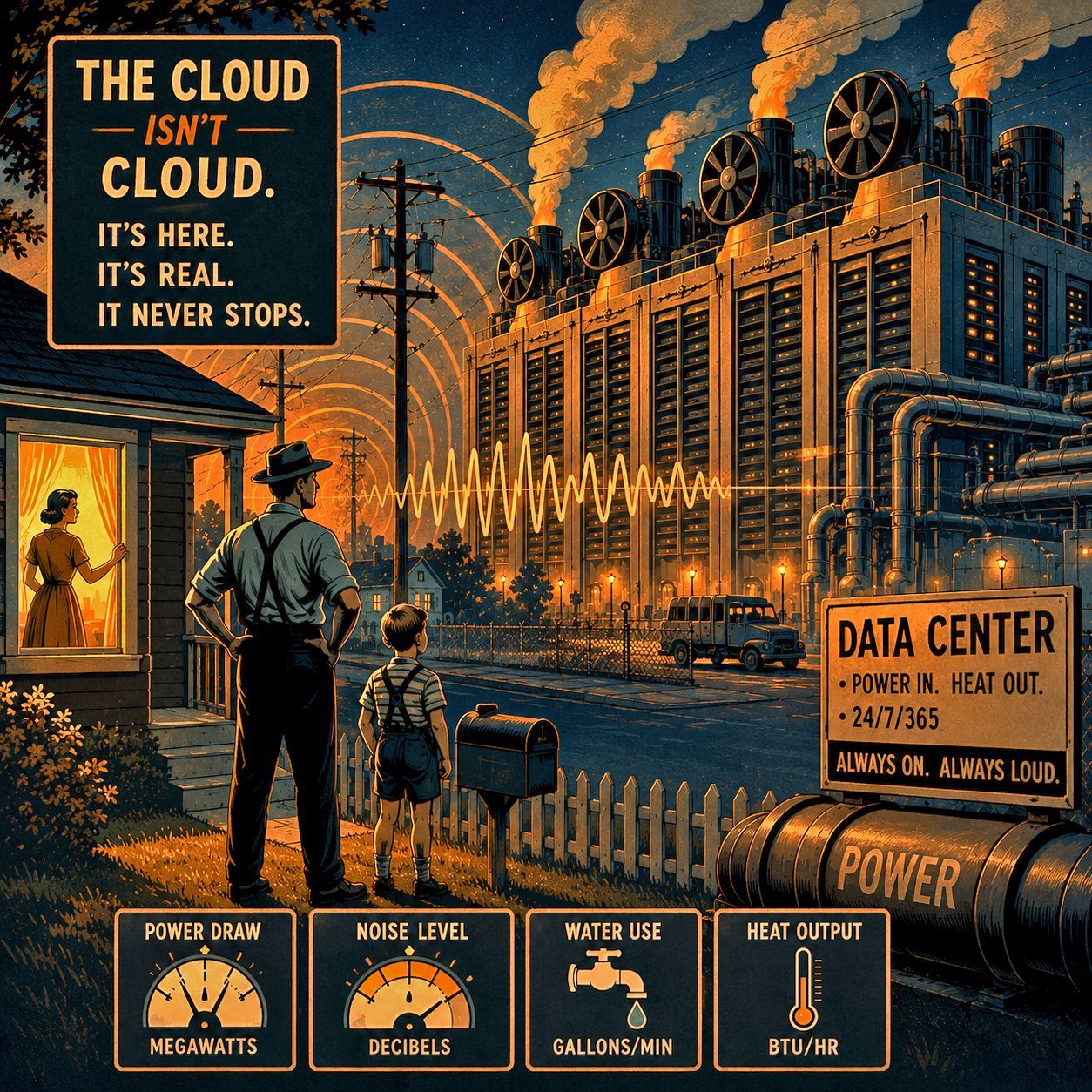
The Field Around You: What Your Cells Are Experiencing That the Standards Aren't Measuring
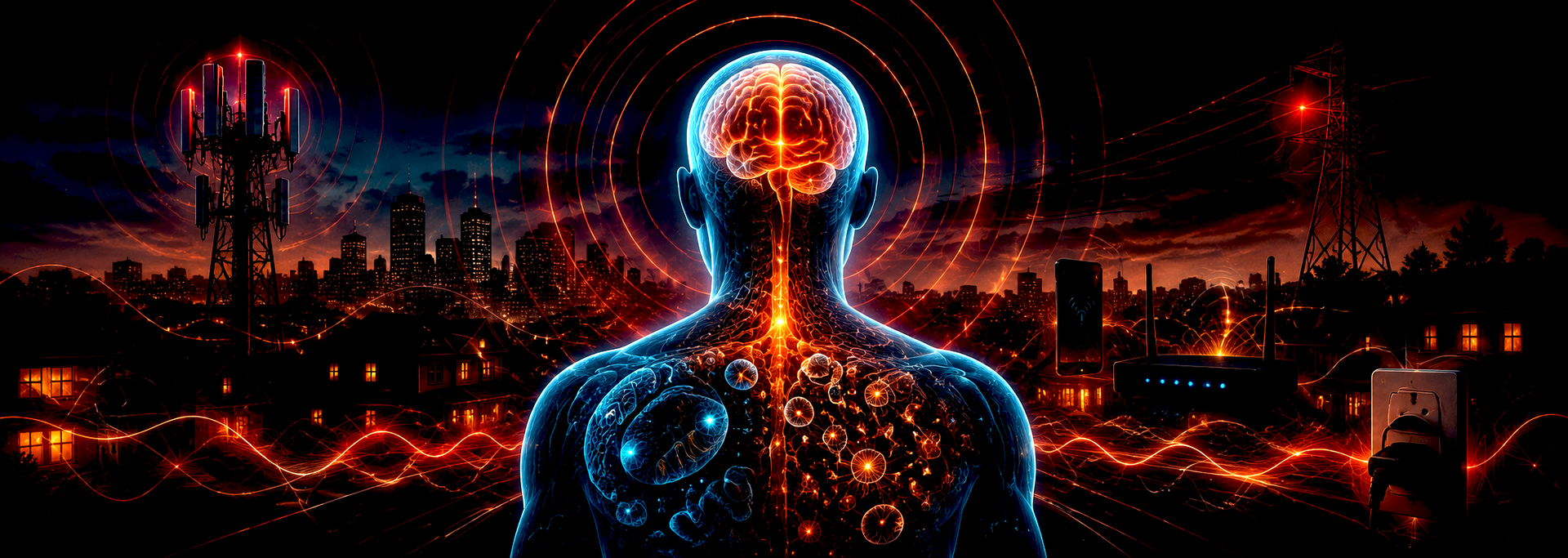
Right now, as you read this, you are inside a field.
Not metaphorically. Literally. Your body is bathed in electromagnetic frequencies from your phone, your WiFi, your power outlets, the cell tower visible from your window, and the power lines running along your street. These are facts. They are measurable. The question isn't whether the field is there. The question is what it's doing, and why the people responsible for measuring it have been using the wrong instruments since 1996.
This isn't speculation. This is documented.
I'm going to walk you through what the research actually shows. Not what I think. Not what I've heard. What peer-reviewed science has put on record, and what the research is conspicuously silent on, and why that silence is itself worth examining.
Make your own decision. But you should know this.
Part One: The Cell Is Where It Starts
Before we talk about towers. Before we talk about infrastructure. Before we talk about what's being deployed in your city right now, we need to understand what's happening at the smallest level. Because every impact starts at the cell.
Your cells communicate through ion channels, specifically voltage-gated ion channels that control the movement of sodium, potassium, and calcium across cell membranes. These channels gate, open, and close in response to electrical signals. They are, in the most literal sense, electrically sensitive by design.
In 2013, Dr. Martin Pall published research in the Journal of Cellular and Molecular Medicine documenting that voltage-gated calcium channels are directly activated by electromagnetic fields, not through heating, but through a non-thermal mechanism. Twenty-three separate studies supported this finding. L-type VGCC blockers, drugs that block these calcium channels, blocked or greatly reduced the EMF effects. The mechanism isn't theoretical. It has been demonstrated.
Here's what happens when calcium channels are disrupted:
Calcium floods into the cell abnormally. That triggers overproduction of reactive oxygen species, free radicals that damage cellular structure. That oxidative cascade damages mitochondria, the energy producers of every cell in your body. Mitochondria under sustained oxidative stress begin to fail. And when mitochondria fail, the cell eventually follows.
This isn't a single-study finding. A 2021 systematic review in the Annals of the New York Academy of Sciences documented that ELF-EMFs most commonly raised baseline intracellular calcium, with chronic exposure consistently driving this effect. A 2014 PLOS ONE study specifically linked ELF-EMF exposure to oxidative stress and neurodegeneration risk in neuronal cells, because the brain, consuming the highest fraction of oxygen of any organ, is particularly vulnerable to oxidative disruption.
The cascade is real. The mechanism is documented. And it operates below the levels that the FCC considers harmful, because the FCC isn't measuring this.
Part Two: Dirty Electricity and What Milham Found
Dr. Samuel Milham is a physician-epidemiologist with over 100 scientific publications and the 1997 Ramazzini Prize for occupational cancer research. What he spent decades documenting is straightforward: the introduction of electrical infrastructure into human environments correlated directly with the introduction of diseases that didn't exist at scale before electrification.
His foundational research, published in the American Journal of Industrial Medicine in 2008 alongside Lloyd Morgan, investigated a cancer cluster at La Quinta Middle School in California. Using a Graham-Stetzer meter to measure what's called dirty electricity, high-frequency voltage transients riding on top of the standard 60 Hz current in building wiring, Milham found that while most homes and businesses read under 100 Graham-Stetzer units, the school buildings averaged around 700.
The findings: 16 teachers in a cohort of 137 were diagnosed with 18 cancers. The observed-to-expected cancer ratio was 2.78, with a p-value of 0.000098. A single year of employment at that school increased cancer incidence by 21%. Specific cancer ratios: malignant melanoma at 9.8 times expected. Thyroid cancer at 13.3 times expected. Uterine cancer at 9.2 times expected.
This study was contested by the school district. That dispute is on record. So are the findings.
What is dirty electricity? It's not a metaphor. It's a measurable physical phenomenon. Every switching power supply, every LED dimmer, every variable frequency drive, every solar inverter introduces high-frequency transients, spikes and harmonics ranging from hundreds of Hz into the kilohertz range, riding on top of the fundamental 60 Hz current in your wiring. Your building's electrical system becomes a conductor for frequencies it was never designed to carry.
Dr. Magda Havas, Professor Emerita at Trent University with over 200 publications, documented a direct connection between dirty electricity and blood sugar regulation. In a 2008 study published in Electromagnetic Biology and Medicine, Havas found that Type 1 and Type 2 diabetics responded directly to the amount of dirty electricity in their environment. In electromagnetically clean environments, Type 1 diabetics required less insulin. Type 2 diabetics showed lower plasma glucose levels. The connection between an environmental electromagnetic variable and a measurable biological outcome, blood sugar, was documented in peer-reviewed literature.
Milham's book, Dirty Electricity: Electrification and the Diseases of Civilization, makes the larger case: the geographic spread of electrification in early 20th-century America correlates with the geographic spread of diseases previously rare, including cardiovascular disease, diabetes, cancer, and neurological disorders. Rural communities that electrified later showed delayed onset. The Amish, maintaining non-electrified households, show significantly lower rates of these conditions.
This is epidemiology. It is pattern recognition at population scale. It is not proven causation in every instance, but it is documented correlation that has never been adequately explained away.
What the Standards Measure, and What They Don't
The FCC's specific absorption rate limit is 1.6 watts per kilogram. It was established in 1996. It has not been updated since.
Let that land. 1996. Before smartphones. Before WiFi in every room. Before 4G. Before 5G. Before the world's first 6G trial happened in Texas in February 2026.
This standard is based entirely on thermal effects, the assumption that the only way non-ionizing electromagnetic radiation can harm tissue is by heating it. The standard was designed to prevent your tissue from being cooked. That is literally what it measures.
ICNIRP, the International Commission on Non-Ionizing Radiation Protection, which sets global guidelines, states this explicitly on its own website: its limits are designed to avoid hazards from nerve stimulation and tissue heating. A one-degree Celsius increase in body temperature is their acceptable limit threshold.
Neither FCC nor ICNIRP standards measure:
Non-thermal effects on voltage-gated ion channels. Calcium dysregulation at the cellular level. Reactive oxygen species production below heating thresholds. High-frequency transient harmonics, dirty electricity. Cumulative chronic exposure effects. Composite field effects from simultaneous multiple-source exposure. Modulation envelope effects, the ELF frequencies riding on RF carriers that are now documented as the biologically active component of wireless signals.
The ICNIRP guidelines acknowledge non-thermal effects as an area of ongoing scientific discussion but do not incorporate them into exposure thresholds.
In 2021, a US federal court ruled that the FCC had failed to adequately consider non-thermal evidence when it declined to update its 30-year-old standards. The FCC lost in federal court. The standards still haven't changed.
In May 2011, the International Agency for Research on Cancer, a branch of the World Health Organization, classified radiofrequency electromagnetic fields as Group 2B, possibly carcinogenic to humans, based on increased risk for glioma associated with wireless phone use. Extremely low frequency magnetic fields were separately classified Group 2B based on childhood leukemia risk from residential power line exposure.
That same month, WHO issued a statement saying no adverse health effects had been established from mobile phone use.
The regulatory body and its research arm contradicted each other publicly. In the same month. That is documented.
Stress Is Not Separate From This
Chronic stress and chronic EMF exposure are not two separate problems running in parallel. They operate through the same cellular pathway.
Cortisol and adrenaline, the primary stress hormones, activate the same voltage-gated calcium channels that EMF directly modulates. Both pathways drive calcium influx. Both pathways generate reactive oxygen species. Both pathways stress mitochondria.
A 2022 study found that EMF exposure is recognized as a mild stress factor that can establish a new set-point for stress system activity, meaning chronic EMF exposure doesn't just add to your stress load, it shifts the baseline your body treats as normal. Every subsequent stressor, physical, psychological, environmental, operates from an already-elevated starting point.
A 2014 PLOS ONE study documented that ELF-EMFs and other environmental stressors amplify the same oxidative pathway. The body doesn't distinguish between electromagnetic stress and psychological stress at the ion channel level. Both activate the same mechanism.
So someone holding a phone for hours while navigating daily life, living within range of multiple transmission sources, sleeping in a WiFi-active home, they're not experiencing these as separate inputs. They're experiencing a compound, continuous, cumulative activation of the same cellular stress pathway. And the standards measuring their safety were written in 1996 for a different world.
The Unasked Questions
There is a category of research that deserves attention not just for what it found, but for what it hasn't looked for.
Respiratory oscillometry is a clinical technique used to diagnose asthma, COPD, and pulmonary fibrosis. It works by applying small-amplitude pressure oscillations, sound waves in the 5 to 35 Hz range, to the airway during normal breathing and measuring how lung tissue responds at different frequencies. The European Respiratory Review published technical standards for this technique in 2022.
What oscillometry has established: lung tissue has documented, measurable, frequency-specific mechanical sensitivity in the ELF range, the same 5 to 35 Hz band where non-thermal EMF effects are documented in cardiac and neural tissue.
What has not been studied: whether ELF-EMF at lung-resonant frequencies produces biological effects in pulmonary cells. The frequency sensitivity of lung tissue is established in the acoustic domain. Whether it exists in the electromagnetic domain, whether the lung's documented resonance properties make it specifically vulnerable to ELF-EMF, has not been asked.
The closest we have is a 2011 study by Esmekaya, Ozer and Seyhan showing that 900 MHz pulse-modulated RF exposure raised lipid peroxidation markers and lowered glutathione in lung tissue in animal models. Oxidative stress in the lung from RF exposure, documented. Not at a frequency-resolved channel level. But documented.
The unasked question is not a small gap. The intersection of lung tissue frequency sensitivity and ELF-EMF effects hasn't been studied. That is worth noting. That is worth asking about.
What Is Already Here
This is not about what's coming. This is about what's already deployed and actively being expanded.
In February 2026, Ericsson completed the world's first 6G pre-standard over-the-air session at its US headquarters in Plano, Texas. The trial used spectrum in the 7 GHz centimeter wave range with a 400 MHz carrier bandwidth. US Secretary of Commerce Howard Lutnick stated publicly that the Trump Administration will always back trusted partners committed to American-designed and operated cutting-edge connectivity. Ericsson manufactures next-generation network equipment at its Smart Factory in Lewisville, Texas.
6G is not a future consideration. It is being trialed right now. In Texas.
In 2022, the Department of Defense launched Open6G, a collaborative initiative between industry and universities through Northeastern University's Kostas Research Institute. The DoD's program director stated that the DoD has a vital interest in advancing 5G-to-NextG wireless technologies for high performance, secure and resilient network operations for the future warfighter.
The NTIA launched Mission 6G 28, an initiative to demonstrate 6G technology at the 2028 Los Angeles Summer Olympics. Their own framing: the nation that sets the standards and controls the underlying infrastructure ultimately determines the security, openness, and competitiveness of the global communications marketplace.
Joint Base San Antonio was named by the Department of Defense as one of seven US military installations for the second round of 5G technology experimentation and testing. JBSA-Lackland, in this city, subsequently completed the One Base One Network initiative, integrating the Texas Air National Guard 149th Fighter Wing into the DoD enterprise network under unified cybersecurity protocols. The 67th Cyberspace Wing operates out of Lackland. It is a named DoD cyber warfare hub.
San Antonio is not peripheral to this infrastructure expansion. San Antonio is a named site.
6G is being designed with ISAC capability, Integrated Sensing and Communications. Networks that simultaneously transmit data and act as high-resolution sensors. Communication infrastructure and sensing infrastructure merged into a single system. That is from Ericsson's own press release, not interpretation.
The FCC standards measuring the safety of all of this haven't been updated since 1996. They measure thermal effects only. They were written before 5G existed. They will govern 6G deployment.
What You Can Do
The first thing you can do is measure your environment.\
The FCC Antenna Structure Registration database at fcc.gov/asr/registrations lists every registered antenna structure in the United States including all territories, Puerto Rico, Guam, the US Virgin Islands, American Samoa, and the Northern Mariana Islands. Searchable by state and county. Government source. Verifiable.
AntennaSearch.com uses FCC data in a map interface. Enter your address and see every registered tower within a set radius. Start with your home. Check your workplace. Check the routes you travel daily.
For dirty electricity, a Graham-Stetzer microsurge meter measures high-frequency transients on your building's electrical wiring. Most homes read under 100 GS units. Milham found 700 GS units at La Quinta Middle School. Know your baseline.
The second thing you can do is read the primary research. Milham's Dirty Electricity: Electrification and the Diseases of Civilization. The La Quinta paper. Pall's 2013 research in the Journal of Cellular and Molecular Medicine. These are publicly accessible. The information exists.
The third thing you can do is ask questions. Ask why the FCC standard hasn't been updated since 1996 despite a federal court ruling in 2021. Ask why IARC classified RF as Group 2B in 2011 and the standards still haven't moved. Ask what it means that 6G is being trialed in Texas while the safety framework governing it was written before the internet was in most homes.
You don't have to accept anyone's conclusions. Including mine. The sources are listed below. Go read them yourself.
We are living inside an experiment that nobody asked us to join.
The infrastructure is expanding. The standards are frozen. The research that challenges the official position, Milham's decades of work, Pall's mechanism, Havas's diabetes findings, the IARC classification, exists in the peer-reviewed record. It has not been adequately answered. It has been marginalized, disputed, and in some cases actively resisted by the institutions whose position it challenges.
That doesn't mean every claim in the critical literature is correct. Science is contested. Findings are disputed. Some studies fail to replicate.
But the documented pattern is this: the cellular mechanism for non-thermal EMF effects exists and is peer-reviewed. The dirty electricity phenomenon is real and measurable. The safety standards haven't moved in thirty years despite a federal court ruling. 6G is being deployed right now in Texas with DoD investment and Secretary of Commerce endorsement. And the research on what those frequencies do to lung tissue at the cellular level, at the resonant frequencies lung tissue is documented to respond to, has not been done.
The absence of research is not evidence of safety.
Sometimes it's evidence of something else.
Stay informed. Stay Woke.